Feature
'We are often overlooked': the realities of women's grassroots cricket
Caitlin Thomas
A young girl left waiting outside the changing rooms while the men’s team talk inside.
A women’s cup final played only after officiators were sourced informally.
Matches played to empty side-lines, with little expectation that anyone will come to watch.
These are not isolated incidents. This is the reality for many women in the grassroots game in Wales.
Women’s and girls’ cricket in Wales has featured with increasing frequency in discussions about the future of the sport in recent years. While participation has grown, there are many challenges facing the grassroots game that remain unresolved. Coaches and players involved with local clubs say limited facilities and inadequate support continue to affect female participation.
At the end of 2025, Cricket Wales established a Women’s Cricket Working Group, led by Women and Girls Lead Carl Holding, with its priorities including safeguarding, greater access to training and development, and improved format and fixture scheduling. The group was set up as recognition that the women’s game is in need of more structured support. But players at a local level say that progress on paper does not always translate into change on the ground.
Second Best
For many women playing club cricket in Wales, it is not an issue of a lack of commitment or interest, but rather a sense that their teams are treated almost as an afterthought within existing club structures. “It often feels like women’s cricket is secondary,” said one player. “We are frequently overlooked and only really get attention when something affects the men’s team or senior club interests”.
Practical realities only serve to reinforce this perception. Several players highlighted difficulties accessing pitches and training times, particularly during busy periods of the season, with priority being given to men’s teams. “We often struggle for the basics,” said another player. “There are fewer fixtures, minimal publicity and very little access to the same resources or recognition.”
Local women's team coach Graeme Bell has also discussed the "unique set of challenges" presented to women's grassroots cricket teams.
He said: "While the club has recently made significant strides - securing funding for a new pavilion and expanding its ladies' section - the transition from a 'start-up' team to a competitive league side involves overcoming a steep learning curve."
Locked out
While grants have been awarded to clubs across Wales in recent years in order to improve facilities and infrastructure, players say that women’s teams don’t always receive equal benefits of these investments. Several players have described situations where outdoor nets and changing room facilities are prioritised for men’s sides, with women’s access remaining limited. Funding for clubs’ long-term growth therefore plays a role in deepening existing inequalities rather than addressing them.
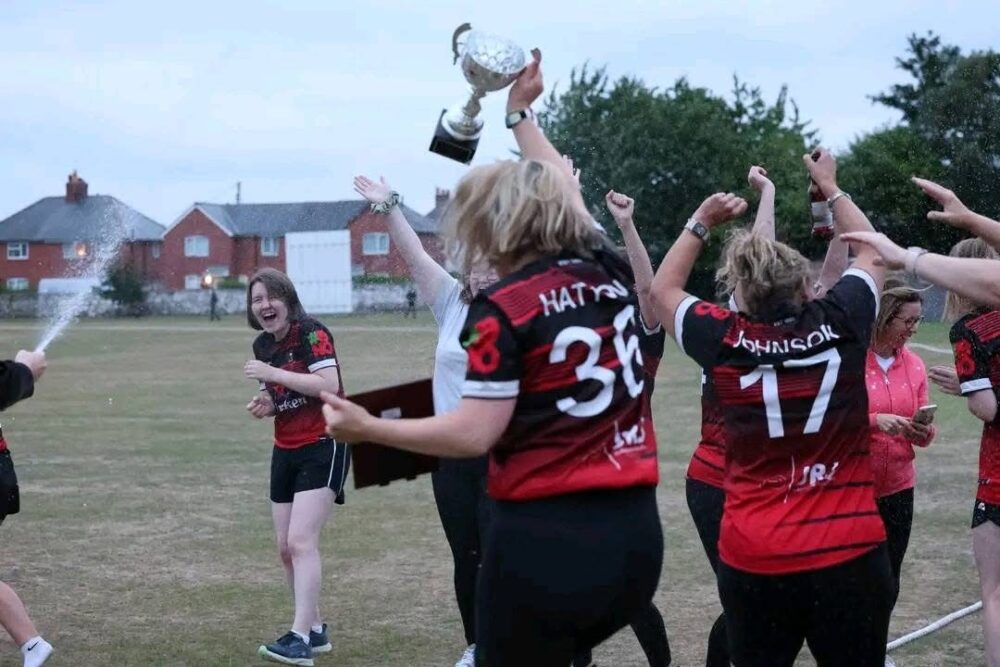
A local women’s team said that its standing within the club only began to shift as a result of a period of on-field success. Following their Flintshire Cup win, the team reported being taken more seriously by the wider club - despite only having had access to a dedicated coach that same year.
“In many cases, to ensure clubs have women’s teams it has to be tied to the men’s,” said another player. “We deserve the same opportunities to grow and shine in our own right.”
Role Models
Former Cricket Wales Women and Girls Lead Sue Wells previously emphasised the importance of female-centred programmes in maintaining participation. She said that dedicated pathways for women and girls were essential in helping players “build confidence, develop skills and stay engaged”. Wells also highlighted that representation beyond the playing field was just as important, arguing that “having more women in coaching and officiating roles is vital, as they serve as role models” for the next generation.
The broader structures within Welsh cricket also present another dimension to the challenge. Unlike other sports, Wales does not field an independent senior women’s international team, with Welsh players instead progressing through the ECB pathway. While Welsh talent has featured at an elite level, no Welsh player currently holds a place in the senior England squad. Contributing to a perception among grassroots players feel that progression is unachievable.
What happens next
Despite frustrations, there is a strong sense of commitment to improvement among those involved in grassroots women’s cricket. Many welcomed the establishment of the Women’s Cricket Working Group, seeing it an opportunity for long-standing issues to be addressed in a more accountable way.
Players say they are not asking for preferential treatment, but parity. Equal opportunities and access to facilities, proper support and to be taken seriously from the outset.
As women’s cricket continues to grow in visibility, the challenge is for Welsh cricket authorities and clubs to work together to ensure progress at the top is sustained at a grassroots level. For those who turn up week in, week out, often working around other commitments, the future of women’s cricket will be shaped by what happens at their local club.
Support our Nation today
For the price of a cup of coffee a month you can help us create an independent, not-for-profit, national news service for the people of Wales, by the people of Wales.
Get more trusted Welsh news
Choose Nation.Cymru as a preferred source in Google News to see more of our journalism.